What A.I Taught Me About My Own Voice
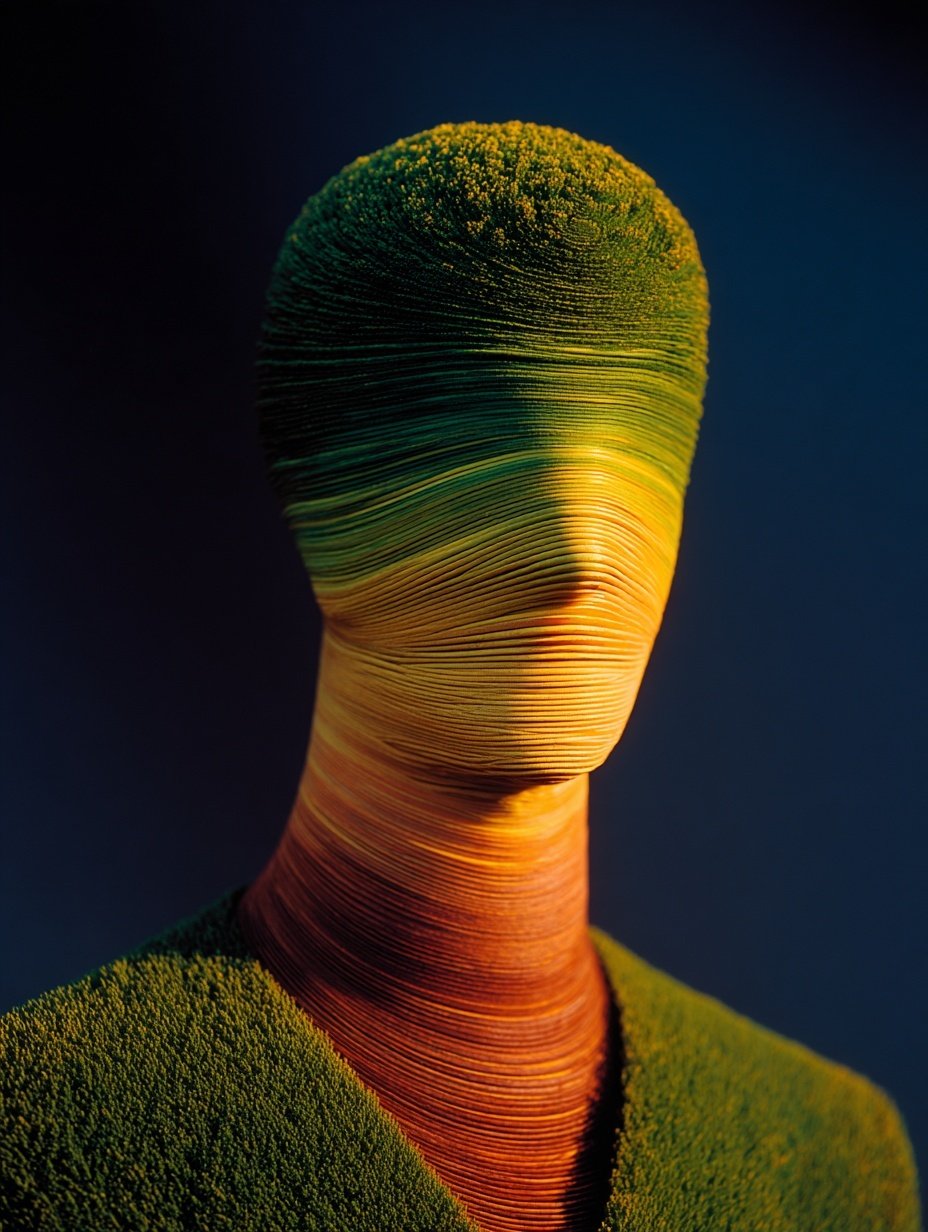
I was sitting at my desk late one night, the room lit only by the soft glow of my screen and the streetlight filtering through the curtains. Outside, Milan was unusually quiet. Inside, my laptop was producing images faster than my eyes could absorb them. One after another, landscapes bloomed, faces emerged, architectures assembled themselves out of nothing. It felt less like designing and more like watching weather form.
I remember thinking: This is too easy.
And then, almost immediately: What does this make me now?
For years, my work had been slow by necessity. A sketchbook. A grid. A half-finished thought abandoned and returned to days later. Design, for me, was a negotiation between doubt and intention. Now, in seconds, a machine could generate what once took hours of wandering. The first emotion wasn’t excitement. It was disorientation - a subtle grief for the friction that had defined my practice.
We talk about artificial intelligence as if it arrived suddenly, like a visitor knocking at the door. But in truth, it seeped in quietly, through recommendation engines, filters, autocorrect, templates. Creativity had already been nudged toward automation long before anyone called it art. The difference now is that the machine no longer waits in the background. It speaks back.
At first, I treated it like a trick. A novelty. I typed prompts the way one throws stones into water, just to see the ripples. The results were impressive and also hollow. They looked like everything and belonged to nothing. Beautiful, but unmoored.
That was the moment I realized the question was not whether AI could make images. It clearly could. The question was whether I still recognized myself in what it produced.
Design has always been an act of translation. We translate feeling into form. Memory into color. Intuition into structure. A machine can assemble visual language, but it does not carry a childhood, a geography, a body. It does not know what it feels like to stand in front of a temple in Jaipur or to walk through a foggy European street and sense how history gathers in walls. It does not know longing. It knows probability.
What I began to understand is that AI does not replace the designer. It replaces the blankness between thoughts. It fills the space where imagination hesitates. And that is both its power and its danger.
My relationship with AI shifted when I stopped asking it to invent and started asking it to listen.
Instead of commanding it to “make something beautiful,” I began to describe the world I wanted to build. I wrote about light. About dust. About fabric and rituals and silence. My prompts became less technical and more narrative, closer to journal entries than instructions. The machine responded not with answers, but with variations. Possibilities. It became a mirror of my own attention.
This is where taste enters the conversation.
In a culture obsessed with speed, taste feels almost rebellious. Taste is slow. It is shaped by books read at the wrong time, by films watched alone, by places visited without photographs. Taste is not something you can outsource. A machine can give you a thousand options, but it cannot tell you which one matters.
The danger of working with AI is not that it will make bad work. It is that it will make too much work. When everything is possible, meaning becomes fragile. Selection becomes the real act of authorship.
I have started to think of AI as an apprentice with infinite hands and no inner life. It can sketch endlessly, but it cannot decide. That decision - what stays, what goes, what feels true - still belongs to the human.
In my workflow now, the most important moments happen after the images appear. I delete most of them. I look for something that feels slightly wrong in an interesting way. Something that carries tension. Something that feels closer to a memory than a trend. The machine proposes; I refuse. Over and over again. Refusal, I’ve learned, is a form of clarity.
There is a quiet anxiety circulating among designers, artists, and writers - that if machines can create, then human creativity must become redundant. But this assumes creativity is about production. I don’t think it ever was. Creativity has always been about perception: noticing what others overlook, choosing one story among many.
What AI reveals is not the end of creativity, but the urgency of it. When images are abundant, intention becomes precious. When styles are easy, voice becomes rare.
I think about how photography was once accused of killing painting, and how film was accused of killing theatre. Each time, the form survived by becoming more itself - more conscious, more deliberate. Perhaps AI is forcing designers into the same reckoning: not what can I make? but why am I making this at all?
There are days when I miss the slowness of before. The quiet resistance of a blank page. But there are also days when I feel a strange intimacy with the machine - an awareness that it is reflecting back my own language, my own obsessions. It does not give me identity. It exposes it.
Working with AI has made me more protective of my voice, not less. It has made me pay attention to what cannot be automated: hesitation, curiosity, doubt, emotional texture. It has shown me that the future of design is not technical mastery alone, but ethical and aesthetic discernment.
Late at night, when the screen fills with images again, I no longer feel the same fear. I feel something closer to responsibility. These outputs are not creations. They are materials. Clay. Light. Raw weather.
The question is not whether machines will shape the future of design. They already are. The question is whether we will shape ourselves in response.
And maybe that is what it means to design with AI without losing your voice: to let the machine speak in many tongues, while you learn, patiently, to recognize your own.
